A hands-on FPGA internship where you design memory-mapped IPs, integrate them with a RISC-V SoC, validate them through software and simulation, and package your work like a reusable industry-ready IP.
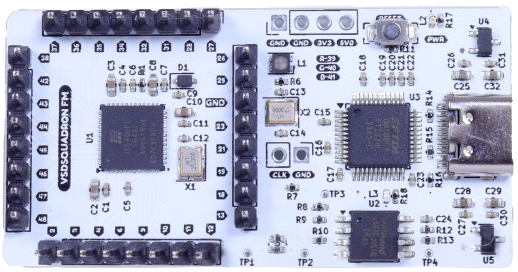
This is a hands-on RISC-V FPGA IP internship built around the VSDSquadron FM FPGA board and a RISC-V reference design. The goal is simple: help you understand how real hardware IP is designed, integrated, validated, and released.
You will begin by setting up a stable development environment and running a known-good RISC-V reference flow. From there, you will design your first memory-mapped GPIO IP, upgrade it into a multi-register peripheral, and then move into real IP ownership such as Timer, PWM, or SPI Master.
The internship does not treat RTL as only a coding exercise. You will also write small C programs that talk to your hardware through memory-mapped registers. You will validate the design in simulation, prepare GitHub documentation, and package your final IP so that someone else can use it without reading your RTL first.
By the end, your output is not just a certificate. Your output is a project repository that shows RTL design, SoC integration, firmware validation, and professional documentation.
The internship follows a progressive task structure. Each task builds one layer of industry readiness. You first prove that your environment and RISC-V reference flow are working. Then you design a simple GPIO IP. Then you upgrade it into a realistic multi-register peripheral. After that, you own a real IP such as Timer, PWM, or SPI Master. Finally, you document and package the IP like a reusable board-level product.
This progression helps you understand the complete path from RTL code to usable IP.
The internship uses a practical tool flow designed for learning, validation, and reproducibility. The early tasks can start in a cloud-based environment, while FPGA board validation is introduced after the RTL and integration flow is understood.
After completing this internship, you should be able to explain how a RISC-V CPU controls an RTL IP through memory-mapped registers. You should be able to show RTL code, C validation code, simulation proof, integration notes, and documentation in one place. This gives you a stronger story in interviews than simply saying “I know Verilog.”
The program is designed to help you build demonstrable skills for RTL design, FPGA prototyping, IP development, SoC integration, and hardware-software validation roles. It does not promise a job. It helps you build the kind of proof that serious semiconductor opportunities expect.
No. You should know basic digital logic and be willing to learn Verilog seriously. The tasks begin with environment setup and a reference design, then gradually move into GPIO, multi-register IP, and assigned peripheral IP development.
No. The internship is useful for students, fresh graduates, and working professionals. It is especially useful for anyone who wants to move from theory or embedded-level exposure into FPGA, RTL, RISC-V, and SoC-level thinking.
The internship is designed around VSDSquadron FM FPGA-based learning. Some tasks can be validated through simulation, especially in the beginning. Board-level validation is introduced where hardware is available and where the task requires physical proof.
A normal course may teach syntax and standalone modules. This internship focuses on IP design inside a RISC-V SoC. You will work with memory-mapped registers, software control, integration, simulation proof, and documentation.
You can show a GitHub repository with RTL files, software validation code, register maps, waveforms, logs, integration notes, and final IP documentation. This helps you explain not only what you coded, but how your IP works inside a system.
Participants who complete the required tasks and submissions will receive a completion certificate. However, the main value is the project proof you build through the internship: GitHub work, validation evidence, and reusable IP documentation.
Yes, but the program requires discipline. The tasks are practical and submission-based. Professionals should plan regular focused time for coding, debugging, documentation, and GitHub updates.
No training program should promise guaranteed jobs. This internship is designed to build strong proof of skill. Good submissions can help you stand out for internships, interviews, and project-based opportunities.
The internship is structured in stages so issues can be isolated. First you bring up the environment, then the reference flow, then IP development. You are expected to document errors, debug systematically, and ask precise technical questions.

VSD, standing as a trailblazing Semiconductor EdTech company and a community-based Technology Aggregator, is revolutionizing the landscape of VLSI Design. With the belief that “Creativity is just connecting things”, VSD has mastered the art of linking the right resources with the community. This unique approach has sparked a significant transformation in the VLSI Design process.
Over the past decade, VSD has made remarkable strides in the open-source semiconductor domain. Our journey includes the development of comprehensive training content, empowering students to design silicon-grade IP/SoC. Notably, we’ve successfully guided these projects through the tapeout cycle via the Google open shuttle program. This achievement is a testament to our commitment to hands-on, practical education.
At VSD, our role extends beyond traditional education. While we didn’t invent EDA tools or design flows, we’ve made them accessible to a wider community. Our mentorship has been instrumental in the development of over 50+ Analog/Digital IPs and solutions. Impressively, 20+ of these have successfully transitioned from concept to Silicon – a clear indicator of our effective approach and the high quality of work produced under our guidance.
We pride ourselves on fostering a community-based revolution in the Semiconductor Industry. By democratizing access to advanced tools and knowledge, VSD is not just educating individuals; we are building a community of innovators poised to lead the next wave of advancements in the semiconductor sector. With VSD, the future of VLSI Design is not just being written; it’s being rewritten by a passionate and empowered community.
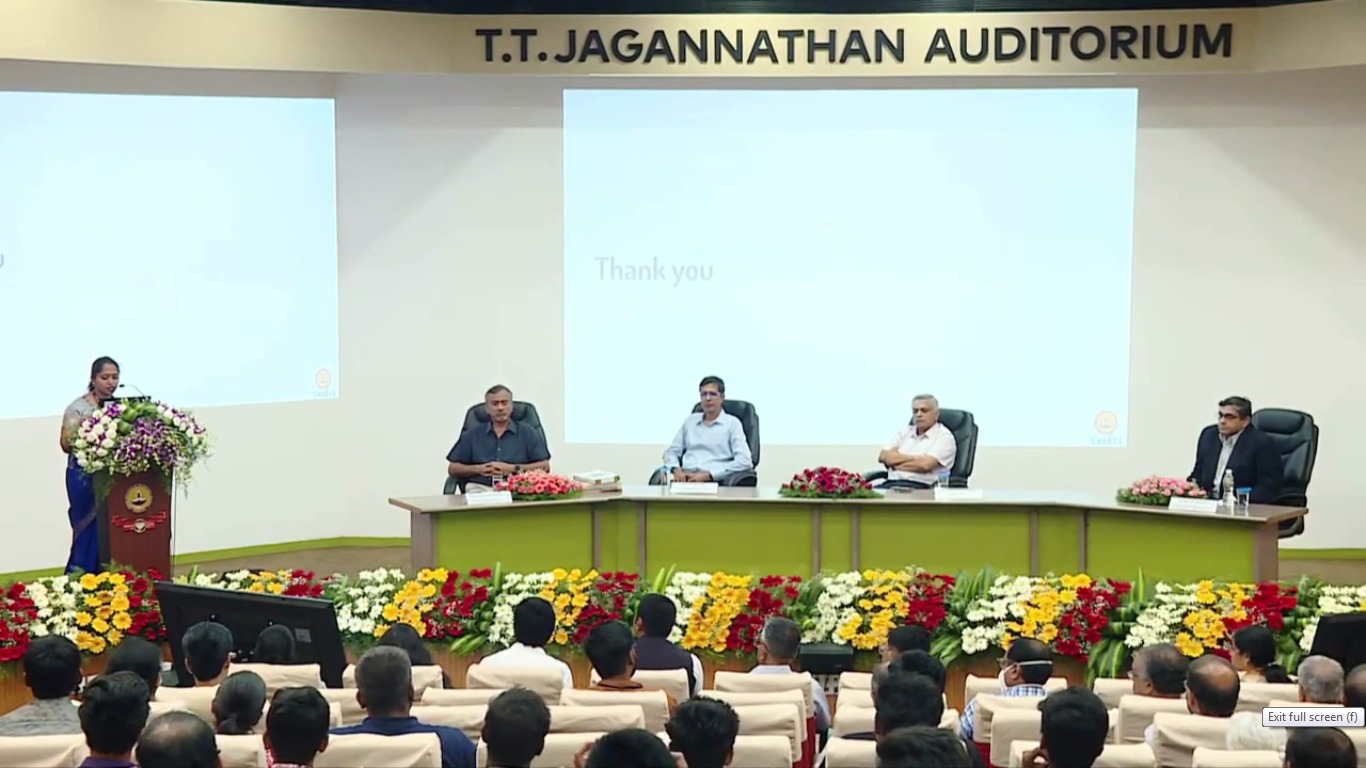
VSDSquadron was launched by Prof. V. Kamakoti, Director of IIT Madras
VSD Launches VSDSquadron In Collaboration With IIT Madras & DIR-V

Job Roles, Convergence With Embedded Systems, and Startups
VSD showcased at Semicon India 2023

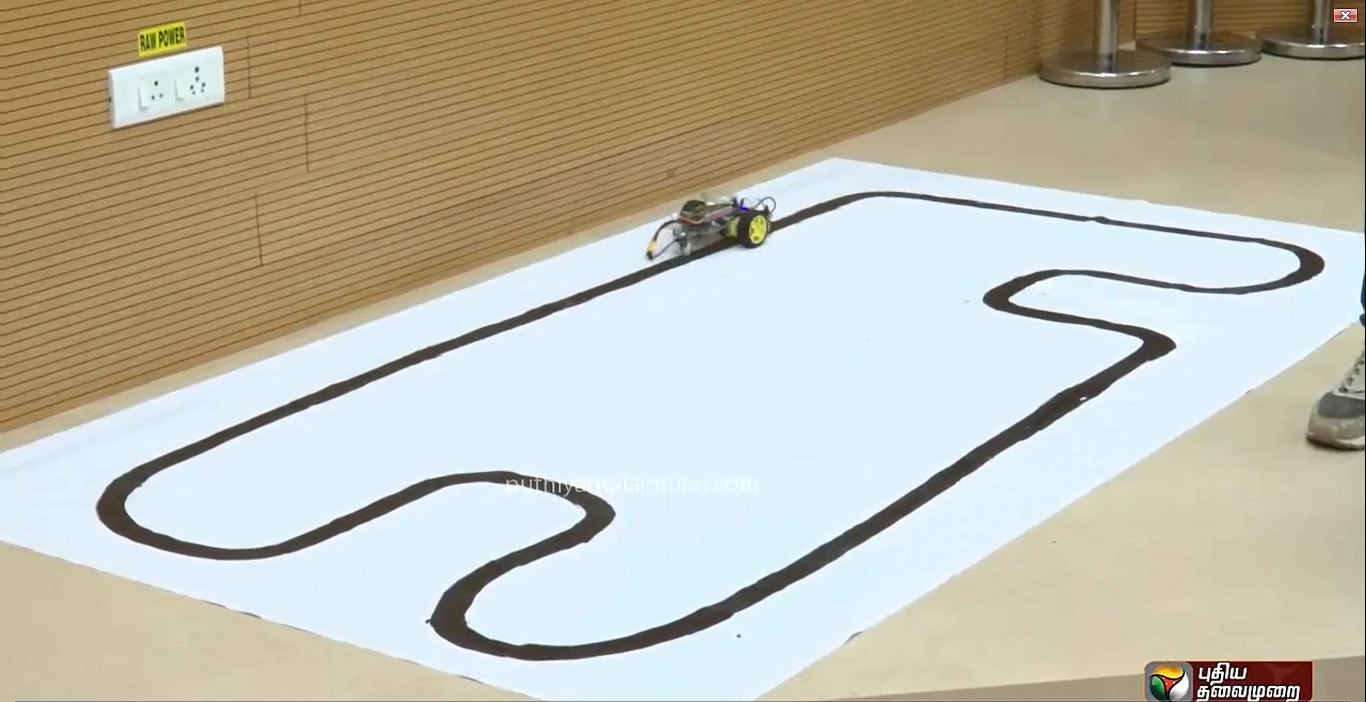
VSDSquadron Educational board on Tamil News channel

5 Day Workshop on VLSI Design Flow using RISCV and EDA Tools

Karnataka VLSI roadshow at Sahyadri College, Mangalore
Welcome to Ethical RISC-V IoT Workshop
The “Ethical RISC-V IoT Workshop” at IIIT Bangalore, organized in collaboration with VSD, is a structured, educational competition aimed at exploring real-world challenges in IoT and embedded systems. Participants progress through three stages: building an application, injecting and managing faults, and enhancing application security. The event spans from May 9 to June 15, 2024, culminating in a showcase of top innovations and an award ceremony. This hands-on hackathon emphasizes learning, testing, and securing applications in a collaborative and competitive environment.
VSDSquadron, a cutting-edge development board based on the RISC-V architecture that is fully open-source. This board presents an exceptional opportunity for individuals to learn about RISC-V and VLSI chip design utilizing only open-source tools, starting from the RTL and extending all the way to the GDSII. The possibilities for learning and advancement with this technology are limitless.
Furthermore, the RISC-V chips on these boards should be open for VLSI chip design learning, allowing you to explore PNR, standard cells, and layout design. And guess what? vsdsquadron is the perfect solution for all your needs! With its comprehensive documentation and scalable labs, thousands of students can learn and grow together.
With VSD Hardware Design Program (VSD-HDP), you have the opportunity to push the boundaries of what exist in open source and establish the new benchmark for tomorrow.
It will leverage your degree in Electrical or Computer Engineering to work with
Sounds exciting to just get started with expert mentors, doesn’t it? But we are looking for the next generation of learners, inventors, rebels, risk takers, and pioneers.
“Spend your summer working in the future !!”
Outcomes of VSD Online Research IP Design Internship Program
VSD – Intelligent Assessment Technology (VSD-IAT) is expertly built training platform and is suited for designer requirements. Semiconductor companies understand the value of training automation and Engineer performance enhancement, and do not need to be convinced of the impact of a virtual platform for learning. VSD trainings are quick, relevant, and easy to access from any device at any time zone.
VSD is working towards creating innovative talent pool who are ready to develop design and products for the new tech world. VSD believes in “Learning by doing principle” , and always prepare the student to apply the knowledge learned in the workshops, webinars and courses. We always push our students to work on new designs, test it and work continuously till it becomes the best performing design. Any student who enrolls to VSD community starts working with small design and grows with us and develops a tapeout level design with complete honesty and dedication towards the Work !!
Check out VSD Interns Achievement!
Welcome to the World’s only online conference in Semiconductor Industry VSDOpen Conference. With enormous support and global presence of audience from different segments of industrial lobby and academia made a highly successful event. Evolution is change in the genetic makeup of a population over time, online conference is one kind evaluation everyone adapt soon.
VSD offers online course in complete spectrum of vlsi backend flow from RTL design, synthesis and Verification, SoC planning and design, Sign-off analysis, IP Design, CAD/EDA automation and basic UNIX/IT, Introduction to latest technology – RISC-V, Machine intelligence in EDA/CAD, VLSI Interview FAQ’s.
Current Reach – As of 2021, VSD and its partners have released 41 online VLSI courses and was successfully able to teach ~35900 Unique students around 151 countries in 47 different languages, through its unique info-graphical and technology mediated learning methods.